Personal Finance Kenya [10+ free lessons and templates]
By Nash Thuo
![Personal Finance Kenya [10+ free lessons and templates]](/wp-content/uploads/2022/06/Personal-Finance-Kenya-Free-Lessons-w1080.webp)
In this guide
- Personal Finance Kenya: Lesson 0
- Disclaimer on the Personal Finance Kenya Lessons
- Getting the best out of the Personal Finance Kenya Lessons
- Personal Finance Kenya: Lesson 1
- Personal Finance Kenya: Lesson 2 – Introduction
- Personal Finance Kenya: Lesson 2 – Banks in Kenya
- Personal Finance Kenya: Lesson 2 – PayPal in Kenya
- Personal Finance Kenya: Lesson 3 – Introduction
- Personal Finance Kenya: Lesson 3 – Emergency Fund (Expenses)
- Personal Finance Kenya: Lesson 3 – Emergency Fund (Investments)
- Personal Finance Kenya: Lesson 3 – Vacation + Goals account
- Free Net worth tracker
- Next steps
Personal Finance Kenya content is rarely tailored to our market. It feels more like a repetition of American content. This frustrates Kenyans when it doesn’t work.
Even worse, there are a lot of personal finance courses in Kenya charging a lot of money for basic information! You should have been taught this in school and not pay for it as an adult! This is my small way to correct this and give back to my fellow Kenyans.
PS: The principles herein can be applied anywhere in the world. Some aspects will be unique for a Kenyan or someone in Africa. Different part of the world. Different challenges. Different opportunities. I will refer to Kenya though as it’s home.
Personal Finance Kenya: Lesson 0
Look forward to over 10 lessons on how to manage your money in Kenya. Yes that’s right! These are comprehensive personal finance lessons at no cost to you!
Practical content that works in Kenya not content repeated from American books and media. Forget 401Ks and Roth IRAs. What about NSSF, chamas or Kenya NSE? I waited until I achieved financial freedom so as to start these lessons. Therefore, I can say these insights work in Kenya!
You’ll get access to templates I created through my financial freedom journey. So you won’t be starting from scratch and will be using something proven to work here in Kenya! So you might be asking. Why would someone be willing to give all that for free?
Reason for the free Personal Finance Kenya lessons
Watch the video: Reason for the free Personal Finance Kenya lessons
Hope the video explained why I chose to share these free lessons. That it also shows you how a small act of kindness can not only come back to help you but also those close to you. How it can inspire you to do something not only for yourself but society as a whole.
I’m hoping these lessons will save you valuable time so you don’t have to figure this out all by yourself. Neither, will you need to pay for the basics of personal financial management in Kenya. Take the money you would have paid and start your investment journey with a basic money market fund.
Since, you would have spent it either way, leave it to compound and then talk to me after 10+ years! Oh the things you’ll do with your pot of gold…
How to navigate the personal finance course
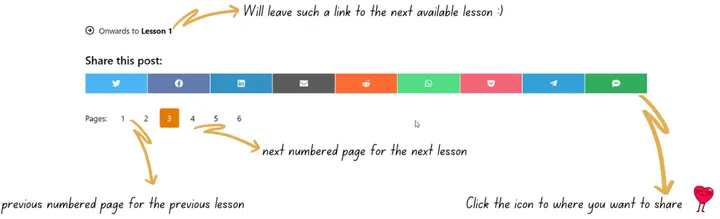
The lessons are crafted to offer more insights as you go deeper. Each next numbered page is designed to amaze you more than the last one! Think of each new page of the lessons as the guidance you need for the next step in your journey to financial freedom.
I will tag along to cheer you on and provide guidance. Leave a comment if you have any questions or feedback. I promise to answer every comment. Excited to see you in the next lesson. But first chew on some disclaimers.
- Onwards to Disclaimers
Disclaimer on the Personal Finance Kenya Lessons
The lessons herein are based on my experiences. There is no certification behind them! That’s their value! It’s not something learnt through a lecture or certification.
It was learnt the hard way! Through trial and error. Through trial and success. I am sharing what has worked for me here in the 254. Therefore, this Personal Finance Kenya lessons are for a broad audience. They are not tailored to you or your circumstances. Most bloggers will tell you at this point to consult with a professional (which you should). I am not most bloggers though.
I will do one better. No person or professional can tell you what is best for you. You know what is best for you. You can and should consult with a professional but make sure you make and own the decision on what to do for your finances. That’s why it is called Personal Finance. Apologies, I was wrong. Mums. Mums know best. So it is you and or your mum. No one else. Unless… your mum is a professional. In which case double great for you! And oh… I am no slouch either:
-
Bachelor of Commerce (Finance) – Vice Chancellor’s Academic Award (2011)
-
Certified Public Accountant (CPA)
-
9+ year experience in the biggest of the Big 4s – Africa Experience Awardee (2014)
Enough on career and qualifications. That’s what my LinkedIn profile is for! Just wanted to say, I may not be a mum but I know a thing or two. That said. Read the lessons. Think about them. Use the information to make the best decision for your finances. Then #PayItForward
Now that you have had your delicious course of disclaimers, we can move on!
- Onwards to Getting the best out of the Personal Finance Course
Getting the best out of the Personal Finance Kenya Lessons
- You may end up wiser than someone who hasn’t gone through the lessons but you HAVE to put them into practice to get maximum benefits!
- The bigger the screen. The better the read. But read from what you have. The vital thing is to learn and apply!
- Lessons are best done with family, friends or colleagues. Research shows, goals are more likely to be achieved this way. It could be a way to breathe new life to that WhatsApp Group or Chama.
- Read in sequential order! Done my best to arrange the lessons logically.
- Take notes as you learn. Bookmark the article to easily get new insights or for a refresher when needed!
- Watch the video lessons. There is a balance for when the Personal Finance Kenya lessons are best learnt through text, images or videos.
- 10+ ready lessons! Binge read in one go or take one per day. Up to you!
- There are links to other great content. Don’t worry. They all open in a new tab. Continue reading and then go back to the tabs you were interested in.
- I want to have fun with the lessons. So, if a joke lands, let me know in the comments. If it doesn’t please know my career is in audit and accounting so….
- Why don’t skunks have to pay taxes? Because they only have one scent.
- Have you heard about the new dating app for CPAs? It’s called Let’s Get Fiscal.
- How did the auditor propose to his girlfriend? with an engagement letter
See, we can blame accounting!
Subscribers of the are notified about new video lessons!
YouTube subscribers
Kenyan Telegram Channels
Subscribers of the Personal Finance Lessons Telegram Channel are notified on new content and get links to the free templates!
Telegram subscribers
Otherwise, you can interact with the rest of the nasthuo.com community in the Telegram Group.
I believe in paying it forward. So, help the next person by sharing this article. We need to walk this financial freedom journey with our friends and family.
- Onwards to Lesson 1
Personal Finance Kenya: Lesson 1
Welcome! You are about to experience a personal finance masterclass Kenya specific and at no cost to you!
One of the most powerful things you can do for your money, is to create a personal net worth tracker. You will build your own tracker in the next few lessons of this personal finance course for Kenyans!
Having achieved financial freedom, I can confidently say this specific template is proven to work here in Kenya!
It has also taken over 9 years to perfect! This lesson will focus on the Liquidity section of the net worth tracker. So it’s all about getting your Kenya Shillings right!
Watch the video: Personal Finance Kenya: Lesson 1
Here are key takeaways from the lesson:
How to set up banks in Kenya
-
Don’t be afraid to have more than one bank account in Kenya. Most banks won’t give out this information but they all have a free current account! Ask to open this type of account. It is called a Pay-as-you-go account in most banks.
-
Analyze your recent bank statements (3-6 months) or find out the bank used by the people or businesses you transact with frequently. Your typical candidates would be your employer, landlord, school, utility providers and so on.
-
Once, you identify the bank with which you transact with frequently, open a free account with them.
-
Your transactions with parties identified earlier will also be free. Use the free standing orders to automate recurring expenses or investments.
-
Repeat the process for the banks you often use for investing.
My bank account setup in Kenya
Below is how I’ve set up my money:
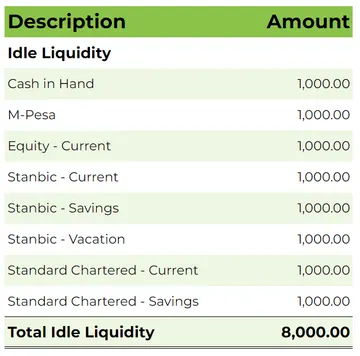
_*_For illustration only – not actual amounts
I call this the “Idle liquidity” section of my net worth tracker. This is because your money is not working for you if it is here.
- How many banks do you have?
- What’s your best bank in Kenya? Why?
Let me know in the comment section.
Younger Nash liked to open a lot of bank accounts for various goals. He got wiser as he learnt more about managing money in Kenya. The above is actually an old set up before I learnt I can have my cake and eat it too.
That I can be liquid while having my money working hard for me. That is the next topic. #PayitForward
- Onwards to Lesson 2
Personal Finance Kenya: Lesson 2 – Introduction
Hope by now you have found value in the lessons.
Trust by the end, you will save money by not attending an expensive personal finance academy.
You will also save time spent crawling through finance blogs in Kenya.
This lesson digs into the Liquidity section of the net worth tracker. It’s about setting up a money system that works for you in Kenya!
Watch the video: Personal Finance Kenya: Lesson 2 – Introduction
The power of cash flowing liquidity
I have become financially wise mostly through trial and error and trial and success. One of the most powerful discoveries I made in my journey to financial freedom in Kenya is what I like to call “Cash flowing liquidity”.
I have not heard anyone talk about it in the way I will. So I am actually claiming it as my original insight! I honestly stumbled across it and it has done wonders in fast tracking my path to financial independence in Kenya!
Once, it clicked in my mind, I started enhancing my approach to money in Kenya. Here is what my Kenyan bank account setup looked like before:
As I said, there were many experiments done to optimize the returns without sacrificing liquidity and this is how it looks now:
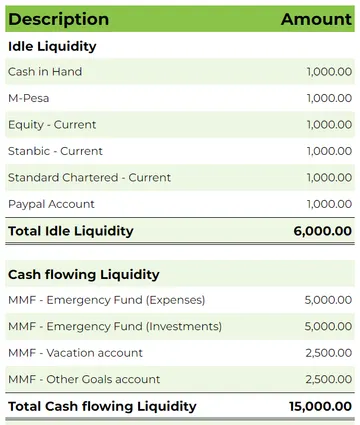
_*_For illustration – not actual amounts
Cash flowing liquidity is a big part of my Jaza Shilingi system to growing your wealth in Kenya. The Nash Thuo Jaza Shilingi system. I like the ring of that!
If Kenyatta and Moi can name all the roads, schools, hospitals and goats in Kenya after them. I can also name a system I perfected over the last 9 years!
So let’s dig deeper into each item in the liquidity section of your net worth tracker. The items are in order of liquidity.
Cash in Hand
This is most liquid section. It’s basically the coins and notes you carry in your pockets. I try to carry minimal cash.
Carrying cash has so many cons:
- Can lose it or its stolen.
- Unhealthy in these COVID times.
- No return on investment.
The more you stay in cash, the more likely inflation will erode it.
M-Pesa
I try to have as little as possible in my M-Pesa account. This is especially so in the age of instant Bank to M-Pesa transfers.
People rarely talk about it but M-Pesa is an expensive way to transact! Convenient but expensive. Hope this changes soon. A solid and innovative company though.
I did the math. This is how MPESA charges avoided and invested in say the Sanlam Money Market Fund would grow!

M-Pesa has similar cons to its sister cash (though better than carrying hard cash):
- No cashflows/return on investment.
- Fraudsters have started targeting the platform! Hope they clean this up.
- Transaction charges can add up!
Similarly, its purchasing power is eroded by inflation if not invested.
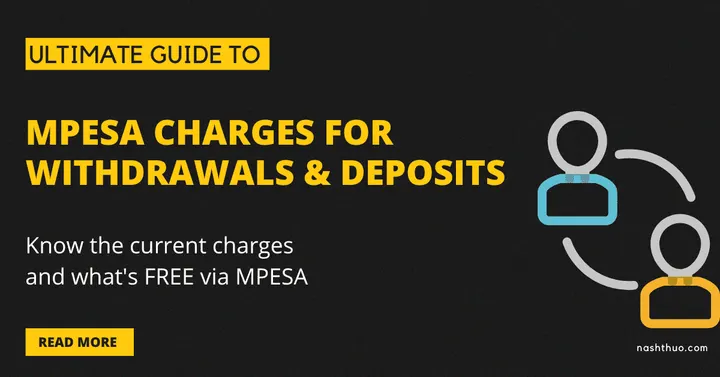
Learn about the New MPESA charges for sending or receiving money via phone, ATM or MPESA agent.
The guide includes a curated list of transactions that are FREE via MPESA!
The insights from the other items in the nashthuo Jaza Shilingi system were so great they earned the right to be separate lessons!
Exciting stuff ahead!
- Onwards to Lesson 2 – Banks in Kenya
Personal Finance Kenya: Lesson 2 – Banks in Kenya
When it comes to personal finance management in Kenya, where you bank matters a lot. That’s why you should carefully choose your bank in Kenya.
Sharing the same bank with the people or entities that you frequently transact with, not only saves you transfer charges but also ensures faster transactions!
As noted in the previous section, transaction costs do add up! You will note I made some changes to the earlier lesson’s setup.
Current accounts
My accounts with all the 3 banks are zero fee. You don’t need 3 accounts though! Follow the process in the previous lesson on which bank account(s) to open. Read the how to choose a bank in Kenya article for more guidance. The goal is to lower banking costs while getting faster transactions.
Excellence is when you automate your transactions. That means your recurring expenses and investments are done automatically. There is no need for discipline as you just need to set up the system once. That’s how you wake up one day and you have achieved financial freedom easily!
Saving accounts
Once you learn about money market funds, you wonder why anyone would open a savings or fixed deposit account!
Here are a few things to consider before opening a Fixed deposit account in Kenya:
- The money is locked! There are penalties for withdrawing before maturity. With MMFs, no penalties. You get the money any time plus the interest earned.
- Average return of 6% for banks vs average return of 8% for MMFs.
- Very high amounts needed to start with fixed deposits. With MMFs, you can start with as low as Kshs 2,500.
Savings accounts give notoriously low interest rates in Kenya. The average for all the banks is between 2% and 4%. If your saving account restricts how many withdrawals you can make in a month, then one would rather maintain funds in a zero fee current account.
If your savings account has unlimited withdrawals, my rule of thumb is to save at least one month’s expenses in it. In such a case, the account should be with the bank you pay the most expenses out of. This helps when you have standing orders and provides a ready buffer for your expenses.
The rest of your money should be in a money market fund. You will get higher returns without sacrificing liquidity. That’s because you can get your money within a maximum of 3 working days. You receive it even faster if you and the MMF share the same bank. For example:
- A CIC Money Market Fund and banking with Cooperative; or
- A Sanlam Money Market Fund and banking with Stanbic.
The next lesson shows how you could have made a 100% return passively! Then, it prepares you to win in the future!
- Onwards to Lesson 2 – PayPal in Kenya
Personal Finance Kenya: Lesson 2 – PayPal in Kenya
PayPal is for those who earn money in Kenya online? True. You will need PayPal or a similar service. However, PayPal in Kenya, is the most common mode of payment. Few personal finance coaches in Kenya though discuss its role in your personal finance management. Let’s fix that.
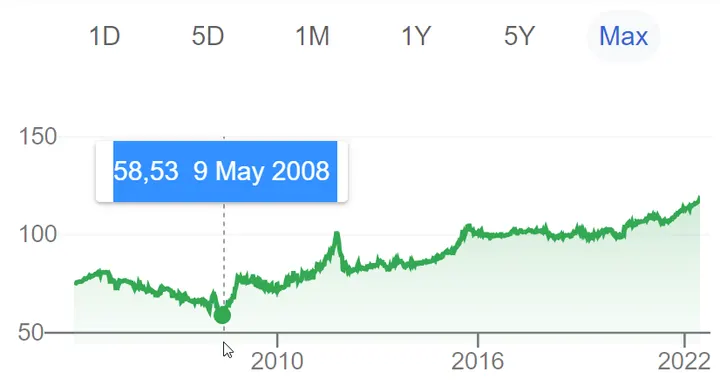
Let’s unpack this graph!
Not sure about you but my mind was blown when I figured this out! I couldn’t believe how obvious and simple it was and no one had told me about it! As I said, lots of experiments and realizations in the 9 years prior to this personal finance course for Kenyans!
So back to the graph.
I always thought the rate was around 70 bob when I was young. The surprise on me when I googled and the chart shows at some point it was as low as Kenya Shillings (Kes) 58 for $1! Granted, this was back in 2008 which was a sad time for our great nation. The crazy part though. The pull your hair out part is, I used to write online articles back then as a way to make money. The site (iWriter) would pay, in USD, to my PayPal account in Kenya.
I was crazy young, dare I say crazy handsome and crazy stupid when it came to money! I can’t even remember how I used the money! I have tried for the last 5 minutes. Nothing. But it was probably something stupid. Back then there was no Nash Thuo to teach me personal finance or where to invest my money in Kenya. But young Nash had to walk so you reading this can run!
So back to the chart.
I wager I made about $500 over my article writing career. That is about 29,265 in 2008 Kenya shillings. Looking back, the pay wasn’t enough for the hours spent. I didn’t know any better though. I will discuss how to make money online in Kenya another day.
Back to the chart.
If I had kept the $500 in my PayPal account and did nothing. No fancy investments in stocks. No Treasury bonds. No Saccos. Nada. If I was lazy and just left it, then the $500 would be 58,820 in 2022 Kenya Shillings!
That is a 100.99% return!
Again. No fancy spreadsheets. No secret tips. Just simple and obvious. If there is one thing I have learnt is that the best form of investing is one that is simple. The moment someone sells complexity, I walk away. Not worth my peace of mind and probably will mean losing some of my hard earned money in the future!
Unfortunately, our eyes seem blind to simple but profitable opportunities because for some reason we think things have to be hard. Otherwise, everyone would make it. Right? Wrong, it’s often the simple that is ignored or worse it remains hidden in plain sight! What is your simple way to earn money or invest?
Please let me know in the comments section. Open my eyes to the simple. The student can also be the teacher! Share it.
We should cry together especially if you had more than $500 back in 2008. But as I learnt from one of my favorite books of all time. The . No use in spending time on what has happened to you. Take the lesson and move forward stronger and wiser.
Key Takeaways
Here are the lessons you should take away from this section:
- Find a way to earn in US Dollars($) or another strong currency to the Kenya Shillings (Kshs). USD though is the common currency in global trade.
- Earning in dollars protects from foreign inflation in Kenya. You won’t fill the pinch when buying items in USD. It increases your global and local purchasing power.
- Earning in USD and Kshs gives you optionality. You get rid of high transaction or conversion charges.
- If you want to buy globally use the USD in your PayPal in Kenya.
- If you want to buy locally use the Kshs in your bank in Kenya. No conversion fees. No shady bureaus.
- The reverse is true. When investing globally, use the USD in your PayPal in Kenya. You also benefit from possible gains by saving the USD.
- Having PayPal in Kenya is superior to a costly USD bank account. It’s free to open a PayPal account in Kenya and there is no charge for holding USD in it.
Warning
Find a way to earn in dollars. I never said to convert your Kshs to USD! That’s a recipe for losses. You’d lose via exchange fees. Also, the Kshs may strengthen after thus more losses. The goal is to protect or enhance your purchasing power. It’s not to be greedy and game the market. You are not a forex trader. Find a way to earn in US Dollars and move on.
- Here’s a link on getting started with PayPal in Kenya.
- Here’s a link on how to make money online in Kenya (and earning in USD).
Now let’s dig deeper into the cash flowing liquidity section of the net worth tracker. What is coming up is an integral part of growing your wealth in Kenya.

-
Onwards to Lesson 3
-
Back to Lessons 0 to 2
Personal Finance Kenya: Lesson 3 – Introduction
Welcome back! Hope you got valuable insights from the previous lessons. In this one, we will learn how to make money while remaining liquid in Kenya.
When creating cash flowing liquidity, there is no tool as versatile as the money market fund (MMF) in Kenya. Whoever made education insurance policies should learn how to create products that make sense. MMFs can be your financial Swiss army knife. You can use them to:
- meet goals
- earn interest
- remain liquid
Here are some of the ways I leverage MMFs in my personal finance management.
Personal Finance Kenya: Lesson 3 – Emergency Fund (Expenses)
An emergency fund is a key part of personal finance management in Kenya and is the OG way to use MMFs. Here are the key benefits of an emergency fund in Kenya:
- Rainy day fund: Money set aside in your MMF to deal with unexpected small expenses. Life happens and when it rains this fund can be your umbrella.
- Antifragility: The more money in your emergency fund, the more antifragile you are. Being antifragile is having options. For example, if you have 1 year’s worth of expenses, you can easily leave a job you hate. You can fund your lifestyle for an year as you look for a good job.
- Peace of mind: The Zen of mind knowing you can deal with emergencies if they arise is priceless. You also create mental bandwidth to grow your wealth.
- Avoid debt: No need to go into debt to deal with emergencies. Your emergency fund saves the day or at worst resets you to zero to fight another day.
- Buffer: Business owners can use an emergency fund to smoothen irregular income. Whenever, you make more than your “normal” monthly income, set aside the “extra” income into your emergency fund. Whenever, you make lower than your “normal” monthly income, dip into your emergency fund to cover the deficit.
Most personal finance coaches in Kenya will advise 3 to 6 months worth of expenses for your emergency fund. Unfortunately, this is goal based thinking. Goals need discipline and motivation. A better way is to setup systems. Systems are sustainable and don’t rely on you being disciplined or motivated to attain something. This is true for your money but also other areas of your life. Read on how to setup systems in your life.
The Jaza Shilingi system uses monthly standing orders to deposit specific amounts into the MMF Emergency Fund (Expenses) account. Over time you get the goal via automation. It will feel good when you get to 3 months’ worth of expenses then 6 and before you know it an year! You get more antifragility and optionality in your life as these multiples of your expenses grow.
Further, the system ensures there is always an emergency fund balance. Even when you withdraw from it, the system will build it up again! That’s the power of automation and system thinking! There are no hard targets. However, lowering your monthly expenses or increasing the standing order will lead to faster success! CIC MMF and Sanlam MMF are best for those using the Jaza Shilingi system of growing wealth in Kenya.
3 things I can point to and say this helped me achieve financial freedom in Kenya. Number 1 is in the next lesson!
- Onwards to Lesson 3 – Emergency Fund (Investments)
Personal Finance Kenya: Lesson 3 – Emergency Fund (Investments)
Another idea in my Jaza Shilingi system that I wish someone had figured out and taught young me. The idea is to set up an emergency fund for your investments. The money market fund and your investment need to have the same bank for it to work.
I leverage the concept in all the investments I recommend for the Jaza Shilingi system. So, I don’t want to spoil that lesson on where to invest your money in Kenya. However, for the sake of this section, let’s look at one example involving Kenya NSE stocks.
A comprehensive guide on buying shares in Kenya and the practical lessons learnt will be shared later in this personal finance course. I use an NSE CDS account with AIB capital (AIB AXYS). You can . No paper work needed!
I use Sanlam Money Market Fund for the Emergency Fund (Investments) account. The bank is Stanbic as both Sanlam and AIB bank with it. This is important as transactions with any of the 3 entities is fast and free! You can however use other entities as long as you identify the common bank between them. This is a key part of this section of the Jaza Shilingi system. It allows you to quickly move in and out of invested positions. So how does this apply to the Kenya stock market?
It is rare for me to sell my stocks as I hold them for the long term. However, sometimes the market offers some great opportunities. So if I own a well performing stock but based on my analysis I think it’s overvalued. I will sell it and then hold the money in the MMF – Emergency Fund (Investments) account. That way the money can be earning interest as I wait for another opportunity in the market.
Another way I use this MMF sub account is to hold the dividends I am paid. My experience especially in the Kenya stock market has been that after the book closure date most dividend stocks normally fall because many people were only chasing the dividend.
My trick has been and it has been working for me. I will wait for the dividend to be paid and then move the money to the MMF sub account for investments. I never panic so I won’t sell the underlying stock as it falls post book closure. The dividend can be earning interest in the MMF as I wait for a chance to reinvest it in the stock.
This is especially important for me when I believe in the long-term value of the company. If short term moves e.g. after book closure give rise to prices that are below my long term valuation, then I will reinvest my dividends into the stock. By the way reinvesting your dividends is the way to ensure compound growth from the stocks bought from NSE in Kenya. But that’s a lesson for another day.
The one thing I can tell you is don’t get into the buying of shares in Kenya if you don’t know what you are doing. It’s a sure recipe to lose money. Wait for the lesson on how to buy shares in Kenya for a bit of wisdom. As I said in the disclaimers section, it is called Personal Finance for a reason.
Educate yourself. That way when it comes to buying shares in Kenya or any other investment, the decision is your own. It should be that you know the basics of what you are investing in. That way you can decide what to invest in and or can ask the right questions when relying on a professional.
The worst mistake you can make is listen to a guru with a hot tip! Another recipe to losing your hard earned coin. Trust me I made that mistake in my rookie years of investing. And no I will not be your guru!

My mission is to educate. Your mission should you choose to accept it, is to learn, share the knowledge and then apply it. Apply only what you understand and own your decisions. Here is a hot tip from not-your-guru guru…
For stock markets in Kenya or anywhere in the world, only invest what you can afford to lose. Leave your ego out of trading stocks. The stock market humbles egos. Ego will make you go all in on a trade and the market will show you who’s daddy. So be humble. Test out your “theories” and “analysis” with small positions. Better to fail fast and fail small. No one wants to go all in and fail big.
Sometimes, you lose your biases when you lose your money. You lose some cents and gain some sense. All of a sudden your eyes open up to a risk or flaw in your perfect analysis. So fail small. Learn from the loss and adjust. Be humble in your gains. Moderate your emotions so greed does not lead to mistakes of confidence.
Most importantly, be patient.
Value will always be unlocked in the long term. All you need is time and capital so as to profit when it finally does. For me patience and the emergency fund for my investments take care of that!
Time out. Reading the last bit and I can’t believe it came from my raised-in-Kigari, primary-in-Njukiini, Kagumo-High-schooling, Taita-Bush-campus-going brain!
Let me quote the hell out of it as I myself need to read and think about those words when I invest!
Value will always be unlocked in the long term. All you need is time and capital so as to profit when it finally does.
Nash Thuo
When you think about it.
An emergency fund for your investments gives you options and the liquidity (cash) to instantly benefit from opportunities in the market. It may be buying land at below market value due to a distressed sale or buying a stock dirt cheap in the NSE.
No matter the asset. You will always be ready to grab it and profit. That is priceless. It’s why excess cash or windfalls are to be swept into an MMF Emergency fund (investments) account. You remain liquid while earning cash flows and will always be ready to grab opportunities. Even Warren Buffet know this.
At worst, with this system, you will never be asset rich and cash poor.
We all want to be rich. Fine with me. A better goal is to also live a rich life. The next lesson helps with that!
- Onwards to Lesson 3 – Vacation + Goals account
Personal Finance Kenya: Lesson 3 – Vacation + Goals account
The reason I initially highlighted the vacation fund on its own is because I like to explicitly bring in the aspect of living a rich life as you can learn from this book. The vacation and goal funds can be merged. You’d use this money market fund sub account to save up for things or experiences you’d like to buy.
Between the two aim to spend more on experiences rather than buying stuff. Research shows spending on experiences leads to happiness. The problem with buying stuff is that your happiness is short-lived due to hedonic adaptation. It’s a term for the joy we get when we buy new stuff which wears off within a few days. The problem is when you start chasing this “joy” by buying new stuff again. Then it becomes a vicious cycle of never ending consumption. Contrast that to spending on experiences. Experiences live in our memory. We can reminisce about the experience and relive the happiness.
Whether that means riding a cable car or marveling at Gaudi’s buildings in Barcelona.


Or paragliding in the coast of Cape Town


Or chasing the sunset in the Maasai Mara


Experiences will pay dividends forever!
You also have experiences to reminisce. Relive them in the comments section. Name the place and the thing you loved best. If there is nothing, tell me what you plan to experience. Who knows it may be the same for both of us! #LetsTakeaTrip
Use this MMF sub account to save for fees, furniture or a vacation. Whatever the goal. Set it. Deposit money via standing order. Earn interest as you plan the trip or purchase. When the goal is reached, withdraw and spend on the experience or thing.
Money market funds in Kenya are versatile. There are other creative ways to use them. For now, have these in your money system:
- MMF Emergency Fund (expenses)
- MMF Emergency Fund (investments)
- MMF Goal Fund
Of the 3, the most important is the emergency fund for your investments. It is key for growing your wealth in Kenya and finally achieving financial freedom.
MMF accounts opened this year!
If you one of the Kenyans above, under my financial advisor code, reach out if you want help in opening the MMF sub accounts.
If you want help to open an MMF account, send me a WhatsApp message via .
The good thing with MMFs like CIC Money Market Fund, is you don’t need a deposit to open the MMF account! You can make the minimum deposit when you get it!
Free Net worth tracker
The tracker’s design is intentionally simple. Simple leads to action. Complexity impedes action. Fill the template to make it your own.
Process to get it via WhatsApp or Telegram:
- Chat with me via this or this Telegram link.
- Save my contact as Nash Thuo for it to work.
- Send a message with the word “secret” to activate the bot.
- Follow the bot commands to get the template and other services.
The above also works with Instagram. Just DM me the word “secret” to activate the bot!
The template will evolve with the lessons. The final one has the pretty dashboards but we don’t need that at this stage of the free Personal Finance Kenya lessons.
Next steps
Use the template above to make your own net worth tracker and thus be ready for the next lesson! We will build your tracker with each lesson. This is the first section. Four more sections to come!
It great to have attained financial freedom in my early 30s. To do it in Kenya is an even greater feat! I don’t think me and you have the same opportunities as someone born in the first world. But men are we hardworking! As a people, if we get our values right, we are destined for greater heights!
Hope sharing this section of the Jaza Shilingi system helps in your path to financial freedom. It’s my small way to give back and improve financial literacy in Kenya. Pay it forward. Also, share this blog with family, friends or colleagues.
Here are bonus lessons to add to what has been shared so far!
- Onwards to Extra Bonus lessons (Coming soon!)